
Diorama2Print – A story from Handcrafting to 3D-Printing
Hi, I’m Jochen, also known as Joe Frizzy.
It all started with classic tabletop handcrafting: cutting XPS foam, carving walls, gluing stones together, and applying paint layer by layer. This kind of crafting was my entry point — analogue, handmade, and driven by patience.
At some point, I began to wonder: Could this passion be continued in a digital way?
So I took the step from hobby knife to CAD software, from the workbench to the 3D printer. Hand-carved stones turned into digital models that can be endlessly reproduced, modified, and combined.
This marked the beginning of my journey from traditional handcrafting to 3D printing — and the foundation of Diorama2Print.
From Idea to Diorama Tiles
Concept: Creating maximum atmosphere through vertical design and a modular approach to height.
My initial goal was to develop a flexible dungeon system — inspired by HeroQuest, Dungeons & Dragons, and the computer games whose design and atmosphere deeply influenced me.
At the same time, I wanted to build tailor-made, atmospheric dioramas for my display cabinets, allowing me to properly showcase my miniature collection.
From this idea, the Diorama Tiles were born: a modular building system for dungeons and — over time — also for skirmish boards. The system continues to grow, constantly absorbing new ideas and gradually evolving into a modular ecosystem for classic fantasy environments and terrain.
Curse of the Citadel
Under the project name Curse of the Citadel, I released my first campaigns and step by step developed the Diorama Tiles system while bringing it to life:
Dungeon Diorama Board – Curse of the Citadel
Diorama Tiles – Curse of the Citadel “Lava Burst!”
Diorama Tiles – Curse of the Citadel “Great Hall”
Each campaign builds upon the previous one, expanding, refining, and optimizing the system.
👉 For a complete and always up-to-date overview of the set, check out the PDF:
What Makes Diorama Tiles Special
Verticality reimagined
Beyond floors and walls, elevated levels and multi-story structures are an integral part of the concept.
The consistent separation of structure and surface design allows for especially exciting layouts and offers a high degree of creative freedom when designing new setups.
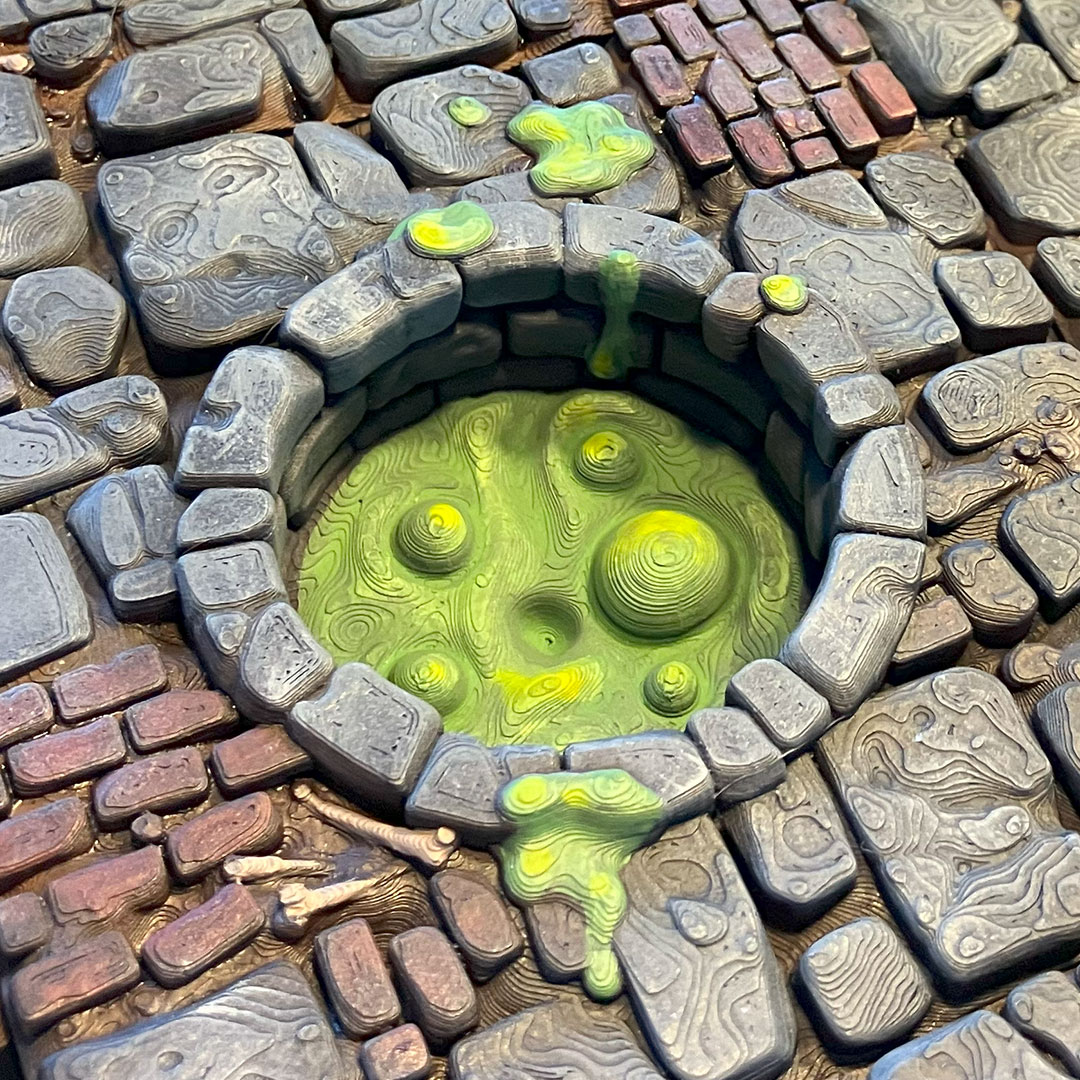
Raised Floor Tiles
Floor elements are slightly elevated, enabling additional design options even without introducing full new levels — helping to create the feeling of truly standing within the environment.

Attention to detail
Every set is designed to tell a story during play — even before the first miniature is moved or a single die is rolled.

Growing resources
On this website, you’ll already find initial articles covering setups and painting documentation. You should definitely take a look at my favorite page as well — the Community Project page!
More setup tutorials and many additional examples will follow, serving as inspiration and a helpful starting point for your own projects.
One Set – Countless Possibilities

Dungeon Play
Originally developed for dungeons, the system provides everything needed for atmospheric D&D sessions — and also supports custom adventures for classic games like HeroQuest (which I still regularly play with friends and greatly enjoy).
Dioramas & Showcases
Build perfectly fitting dioramas to present and display your miniatures.

Skirmish Boards
While originally dungeon-focused, skirmish boards have become a major area of development.
Much of this inspiration came directly from the community and has significantly shaped the evolution of Diorama Tiles.

Wargaming Terrain
I created transition elements such as small stairways and rock formations — which I call Wargaming Transitions — designed to bridge the gap between modular terrain and traditional gaming boards.
This makes it possible to build temple or ruin structures that naturally blend into a battlefield or themed gaming table.
My Motivation
For me, Diorama2Print is more than just design work — it’s my way of making adventures tangible.
The greatest reward is seeing the sets move beyond the screen and onto your gaming tables: painted, played, and full of life.
That’s why I created the Community Projects page — to give this most exciting part of my work a proper stage.
If you’d like to share your own project, feel free to join the Discord or send me an email.